





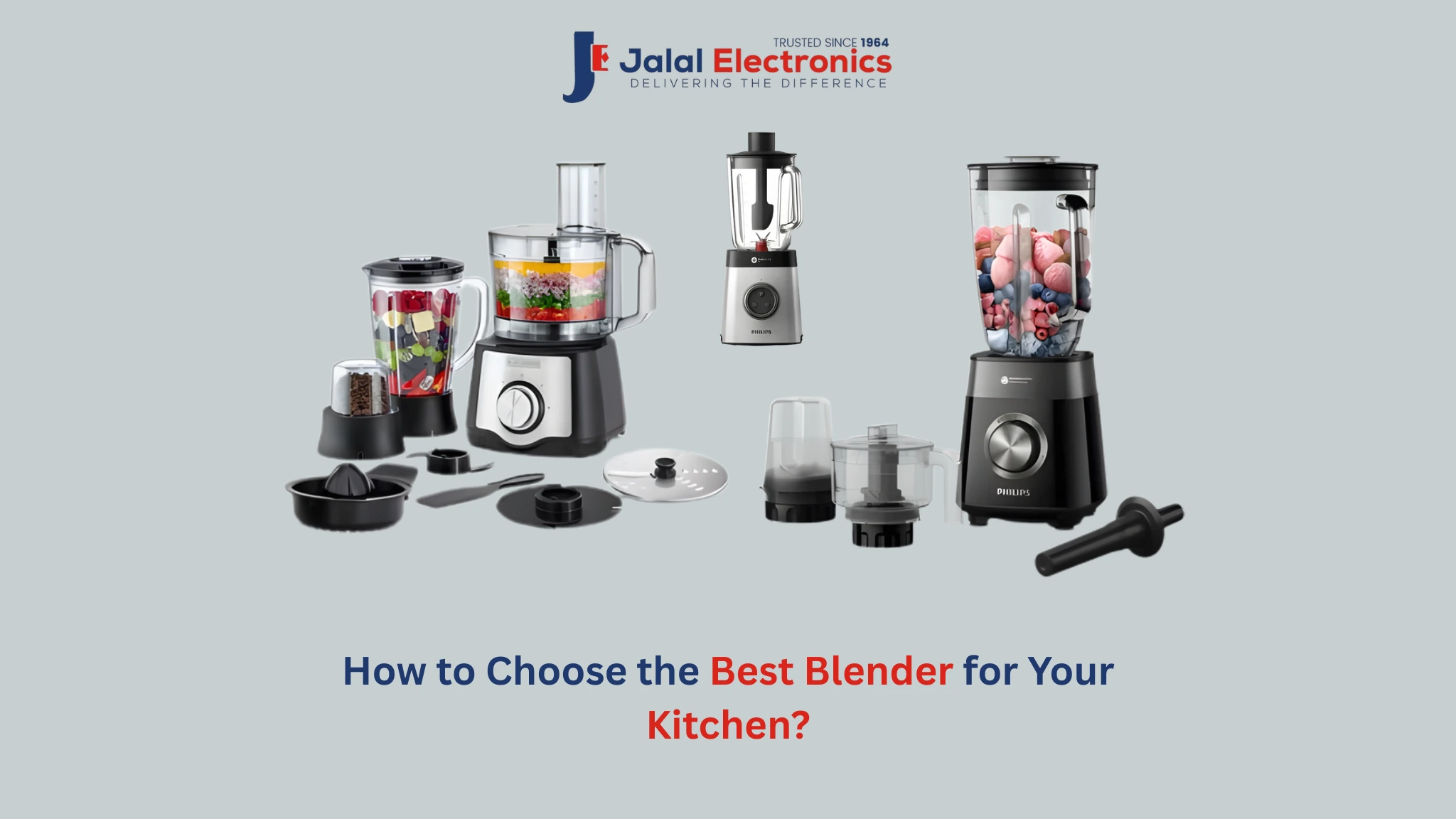
How to Choose the Best Blender for Your Kitchen?

Investing in a quality blender can transform your culinary experience, making meal preparation faster, easier, and more enjoyable. Whether you’re whipping up morning smoothies, creating silky soups, or experimenting with homemade sauces, the right blender becomes an indispensable kitchen companion.
At Jalal Electronics, we understand that choosing the perfect blender can feel overwhelming with so many options available. This comprehensive guide will walk you through everything you need to know to make an informed decision that suits your lifestyle and cooking needs.
Why Do You Need the Right Blender?
In today’s fast-paced world, kitchen convenience can save you time and effort. A good blender is an investment that makes meal prep more efficient, helping you create nutritious smoothies, creamy soups, and even dessert treats with minimal effort. A blender with the right specifications can also significantly improve the quality of your recipes.
The best blender for your kitchen should cater to your specific needs, whether you’re blending soft fruits, crushing ice, or making hot soups.
Choosing the right blender can be overwhelming with so many options available, but it’s important to focus on factors like motor power, capacity, blade design, and additional features. This guide will break it all down for you and help you make an informed decision.
Types of Blenders Available
Understanding the different blender categories helps narrow down your options based on your specific needs.
Countertop Blenders
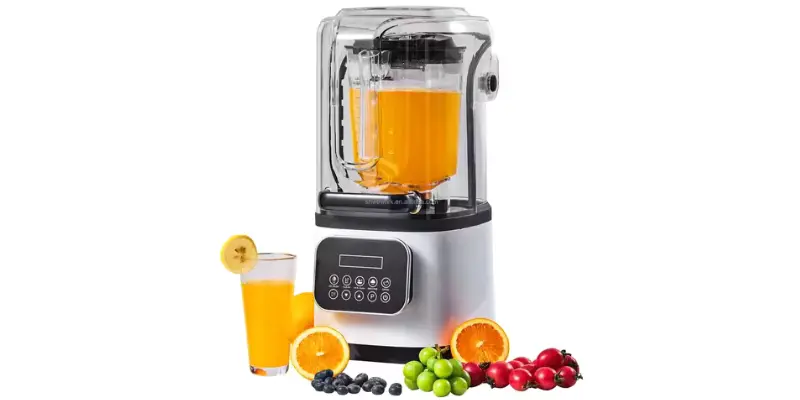
The traditional countertop blender is what most people envision when they think of blenders. These appliances feature a motor base topped with a pitcher or jar and a secure lid. You’ll find them in professional settings like bars, coffee shops, and smoothie establishments, as well as in home kitchens worldwide.
Countertop blenders excel at handling larger quantities and offer multiple speed settings for various tasks. They’re ideal for families or anyone who regularly prepares smoothies, soups, sauces, and other blended recipes.
Immersion Blenders
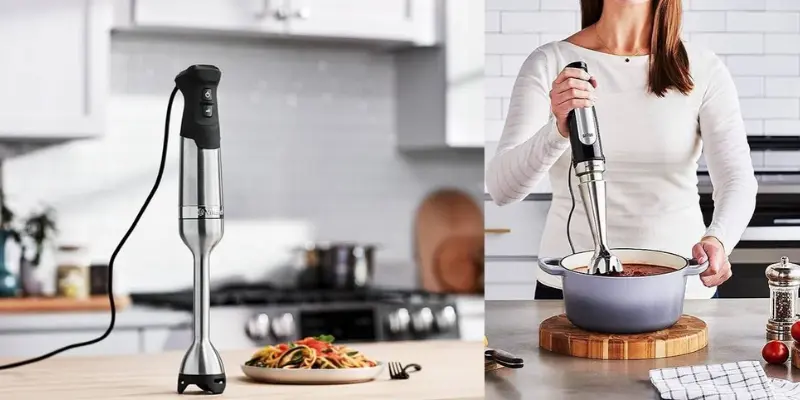
Also known as hand blenders or stick blenders, immersion blenders offer incredible versatility and convenience. These handheld devices allow you to blend directly in any container, whether it’s a pot on the stove, a mixing bowl, or a cup. Their compact design makes storage simple, making them perfect for smaller kitchens or those who need portability.
Unlike countertop models with fixed capacity, immersion blenders can process any quantity you need, from a single serving to a large pot of soup. They’re particularly useful for pureeing hot soups directly in the cooking pot.
Personal Blenders
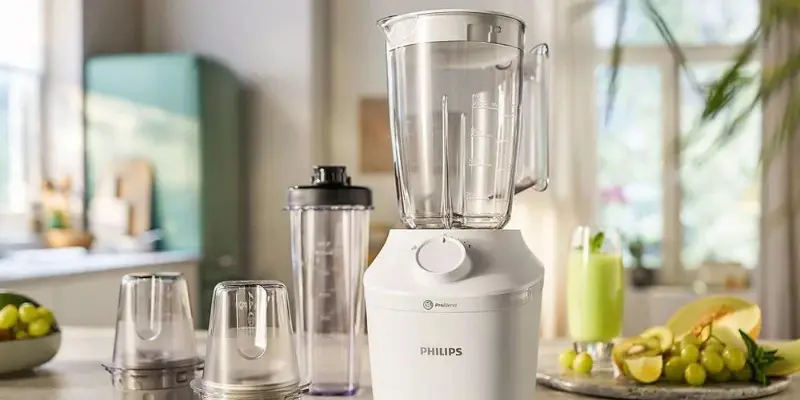
Personal blenders cater to individuals who want quick, single-serving preparations. While typically less powerful than full-sized models, they excel at blending softer ingredients like yogurt, bananas, and fresh fruits for protein shakes and smoothies.
These compact devices are perfect for busy mornings when you need a nutritious breakfast on the go. Many personal blenders feature containers that double as travel cups, allowing you to blend and take your drink with you.
Key Factors to Consider When Choosing a Blender
1. Capacity Requirements
Capacity determines how much food or liquid you can prepare in a single batch. Consider your household size and typical usage patterns:
- Small households (1-2 people): A 1-liter capacity is usually sufficient
- Medium to large families (3-5 people): Look for 1.5 to 2-liter containers
- Frequent entertainers: Consider models with a 2-liter or larger capacity
If you plan to meal prep or make large batches, investing in a blender with greater capacity saves time and effort.
2. Motor Power
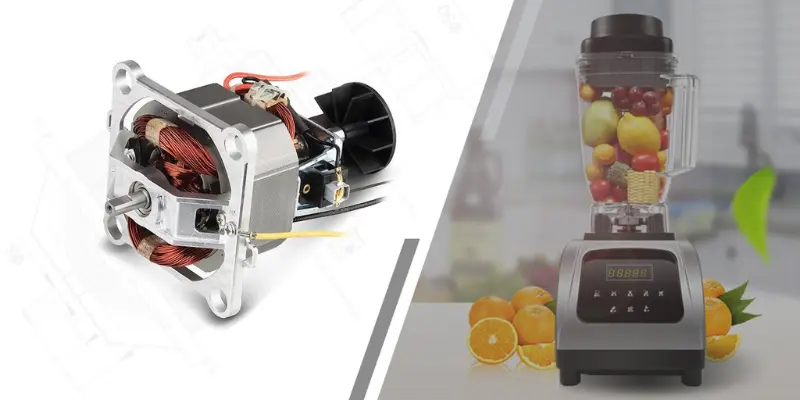
Motor power, measured in watts or horsepower (HP), directly impacts your blender’s performance and versatility. Here’s a breakdown:
| Power Range | Best For | Capability |
| 300-400 watts | Soft fruits, basic smoothies | Light-duty blending |
| 500-800 watts | Daily smoothies, soups, sauces | Medium-duty tasks |
| 900-1200 watts | Fibrous vegetables, ice crushing | Heavy-duty blending |
| 1500-2000 watts | Nut butters, thick mixtures, frozen ingredients | Professional-grade performance |
Higher wattage provides greater flexibility when working with challenging ingredients like frozen fruits, ice, fibrous greens (such as kale), or nuts. If you plan to make green smoothies or nut-based recipes regularly, prioritize higher-powered models.
3. Blade Speed and Quality
Blade rotation speed, measured in RPM (revolutions per minute), affects how quickly and efficiently your blender processes ingredients. Most blenders offer adjustable speeds ranging from approximately 18,000 RPM to 32,000 RPM.
The quality of the blades themselves is equally important. Look for:
- Material: Stainless steel blades for durability and hygiene
- Blade count: Advanced models feature 4 to 6 blades for improved efficiency
- Design: Laser-cut or serrated blades provide superior cutting power
- Configuration: Multi-level blade assemblies ensure thorough blending
More blades generally translate to faster, more efficient blending and easier cleaning.
4. Speed Settings and Control Features
Variable speed settings give you precise control over texture and consistency. Consider these features:
Multiple Speed Options:
Basic models offer 3-5 speeds, while advanced blenders offer up to 10 incremental settings. More speed options mean greater control over your results.
Pulse Function:
This feature allows quick bursts of power, perfect for chopping vegetables or breaking down larger pieces without over-processing.
Preset Programs:
Many modern blenders include automatic settings for common tasks like:
- Ice crushing
- Smoothie preparation
- Soup blending
- Icy drinks
Smart Technology:
Premium models feature intelligent motor control that automatically adjusts speed based on the ingredients’ resistance, ensuring consistent results.
Soft Start Feature:
This technology begins blending at lower speeds to draw ingredients into the blade vortex before ramping up to your selected speed, preventing splashing and ensuring thorough mixing.
5. Container Material and Design
The blender jar or pitcher significantly impacts performance and durability:
Glass Containers:
- Advantages: Durable, scratch-resistant, doesn’t retain odors or stains, dishwasher-safe
- Considerations: Heavier, can break if dropped
Plastic Containers:
- Advantages: Lightweight, shatter-resistant, more affordable
- Considerations: Can scratch over time, may retain odors from strong ingredients
Design Features to Consider:
- Removable center caps for adding ingredients during blending
- Measurement markings for precise ingredient additions
- Pour spouts for clean, drip-free pouring
- Ergonomic handles for comfortable pouring
6. Accessories and Attachments
Quality accessories expand your blender’s functionality:
For Countertop Blenders:
- Tamper tools to push ingredients toward the blades safely
- Personal blending jars for single servings
- Small batch jars for sauces and dressings
- Additional blade assemblies for specific tasks
For Immersion Blenders:
- Whisk attachments for whipping cream or eggs
- Food chopper bowls for vegetables and nuts
- Blending cups with lids for portability
- Interchangeable blending arms and bell blades for different tasks
Practical Considerations:
- Check if accessories are included or sold separately
- Verify compatibility with your chosen model
- Consider storage space for attachments
7. Safety Features
Safety should never be overlooked, especially in households with children:
- Lid-lock mechanisms: Prevent the blender from operating if the lid isn’t properly secured
- Non-slip base: Keeps the blender stable during operation
- Overheating protection: Automatically shuts off if the motor gets too hot
- BPA-free materials: Ensure your food doesn’t come into contact with harmful chemicals
- Cord length and storage: Adequate cord length for convenient placement, with cord storage to prevent accidents
8. Smart Features and Connectivity
Technology has revolutionized blender functionality:
- Wi-Fi connectivity: Allows remote operation through smartphone apps
- Recipe libraries: Access to pre-programmed recipes and blending guides
- AI technology: Automatically adjusts settings based on ingredients
- Self-cleaning programs: Some models clean themselves in 30 seconds
- Digital displays: Show speed settings, timer, and program information
Why Choose Jalal Electronics for Your Blender Purchase?
At Jalal Electronics, we pride ourselves on offering an extensive selection of high-quality blenders from trusted brands. Our commitment to customer satisfaction means:
- Expert Guidance: Our knowledgeable staff can help you find the perfect blender for your needs and budget
- Quality Products: We stock only reputable brands with proven performance and reliability
- Competitive Pricing: Get the best value without compromising on quality
- After-Sales Support: Comprehensive warranty coverage and responsive customer service
- Hands-On Experience: Visit our showroom to see and test blenders before purchasing
Top Blender Brands Available at Jalal Electronics
Jalal Electronics is a trusted name for electronics and kitchen appliances in Pakistan. When it comes to blenders, they offer a range of high-quality models from top brands, such as:
- Ninja Blenders: Known for their powerful motors and multi-functionality.
- Philips Blenders: A reliable choice for everyday use with excellent durability.
- Haier Blenders: Featuring advanced technology and smart functionality, perfect for modern kitchens.
- Panasonic Blenders: Combining style with efficiency for high-performance blending.
You can explore these brands and more at Jalal Electronics, where they provide a wide selection of blenders to cater to your unique needs.
Frequently Asked Questions (FAQs)
What’s the difference between watts and horsepower in blenders?
Both measure motor power. Watts directly measure electrical power consumption, while horsepower indicates mechanical output. Generally, 746 watts equals 1 horsepower. For practical purposes, higher numbers in either measurement indicate better performance. Look for at least 500-700 watts (or 0.7-1 HP) for general home use.
Can I blend hot soup in any blender?
Not all blenders handle hot liquids safely. Standard plastic containers may crack or warp from heat, and steam buildup can cause the lid to pop off. Look for blenders specifically designed for hot ingredients with thermal control jars or vented lids. Immersion blenders are ideal for hot soups since you blend directly in the pot.
How many blades should a good blender have?
Most quality blenders feature 4 to 6 blades. More blades generally improve blending efficiency and speed. However, blade design, sharpness, and motor power matter more than quantity alone. A 4-blade system with excellent design and a strong motor often outperforms a poorly designed 6-blade system.
Are glass or plastic blender jars better?
Both have advantages. Glass jars are more durable, don’t scratch easily, resist odors and stains, and are dishwasher-safe. Plastic jars are lighter and shatter-resistant. Choose glass for longevity and hygiene, or plastic if you prioritize weight and safety around children.
What size blender do I need for a family of four?
For a family of four, a 1.5 to 2-liter capacity works well. This size accommodates multiple servings of smoothies, soups, or sauces in one batch. If you frequently entertain or meal prep, consider a 2-liter or larger model.
Can blenders make nut butter?
High-powered blenders (1200+ watts) can make nut butter, but it requires patience and often a tamper tool to push ingredients toward the blades. Lower-powered blenders typically struggle with the thick, dense consistency. Food processors sometimes handle this task better than blenders.
What’s the difference between a blender and a food processor?
Blenders excel at liquids and creating smooth textures for smoothies, soups, and sauces. Food processors handle dry and solid ingredients better, chopping vegetables, making dough, and shredding cheese. Many people benefit from owning both, though high-powered blenders
Is it worth investing in a high-powered blender?
If you blend frequently, work with tough ingredients (frozen fruits, nuts, fibrous vegetables), or want versatility, yes. High-powered blenders process faster, create smoother textures, and handle a wider variety of tasks. For occasional smoothie making with soft ingredients, mid-range models suffice.
Conclusion: Finding Your Perfect Blending Companion
Choosing the best blender for your kitchen doesn’t have to be complicated. By considering your specific needs, from capacity and power to features and budget, you can find a model that enhances your culinary journey. Remember these key takeaways:
- Assess your needs first: Usage frequency, household size, and intended recipes guide your choice
- Prioritize power for versatility: Higher wattage handles more challenging ingredients
- Consider your space: Countertop, immersion, and personal blenders each suit different lifestyles
- Quality matters: Investing in reputable brands and robust construction pays off long-term
- Features add value: Preset programs, variable speeds, and accessories expand possibilities