

Inverter AC vs Non-Inverter AC | Which One Should You Buy?
Buying an air conditioner is about more than just keeping your room cool—it’s about comfort, energy efficiency, and long-term savings. At Jalal Electronics, we understand that choosing between an Inverter AC and vs Non-Inverter AC can be confusing, especially with so many options available.
Whether you’re looking for an energy-saving, high-performance AC or a budget-friendly model that simply gets the job done, this guide will help you understand the key differences and make the right choice for your home or office.
What Is an Inverter Air Conditioner?

If you want smooth, energy-efficient cooling, an inverter AC might be the answer. Unlike traditional ACs, it adjusts its compressor speed to maintain the perfect temperature instead of switching ON and OFF repeatedly.
This means quieter operation, lower electricity bills, and stable cooling—perfect for homes that need ACs running long hours.
| Feature | Inverter AC |
| Compressor Speed | Variable (adjusts automatically) |
| Power Usage | Optimized to save energy |
| Temperature Control | Stable and consistent |
| Noise Level | Very low |
| Ideal Usage | Long hours, daily use |
What Is a Non-Inverter AC?
A non-inverter AC works differently. It runs at full power until the room cools, then stops completely, restarting later when the temperature rises.
While it cools the room fast, this ON/OFF cycle can increase electricity bills, cause noise, and create temperature swings, making it less ideal for long-term use.
| Feature | Non-Inverter AC |
| Compressor Speed | Fixed (ON/OFF cycle) |
| Power Usage | Higher than the inverter |
| Temperature Control | Uneven |
| Noise Level | Moderate to high |
| Ideal Usage | Short-term or occasional use |
Types of Inverter AC vs Non-Inverter AC
When choosing between Inverter AC vs Non-Inverter AC, it’s helpful to know the different types available. Each type has its own advantages depending on your space, usage, and budget.
| AC Type | Inverter AC | Non-Inverter AC |
| Split AC | Most common type, energy-efficient, quiet, ideal for bedrooms and living rooms | Common type, less expensive, cools effectively, but less energy-efficient |
| Window AC | Compact, suitable for small rooms, inverter models save energy and run quietly | Affordable option, easy to install, suitable for occasional use |
| Portable AC | Mobile units with inverter technology, adjustable cooling, and energy-saving | Mobile units without inverter consume more power, suitable for short-term use |
| Dual Inverter AC | Advanced inverter with two compressors, faster cooling, and higher efficiency | Not available in non-inverter; standard single compressor AC only |
Inverter AC vs Non-Inverter AC: Size-Wise
Choosing the right AC size is just as important as picking the type. The size depends on your room area, usage, and cooling needs. Here’s a breakdown of Inverter AC vs Non-Inverter AC by size:
| AC Size | Inverter AC | Non-Inverter AC | Ideal Room Size |
| 1 Ton | Energy-efficient, quiet, suitable for small bedrooms | Affordable, basic cooling, short-term use | Up to 120 sq. ft. |
| 1.5 Ton | Balanced power and efficiency, perfect for medium rooms, long daily use | Cheaper, adequate cooling, higher electricity bills | 120–180 sq. ft. |
| 2 Ton | Powerful inverter AC for large rooms or offices, stable temperature | Less energy-efficient, good for occasional use | 180–250 sq. ft. |
| 2.5 Ton & Above | Ideal for halls, offices, or open spaces, highly energy-efficient | High power consumption, less efficient for long hours | 250+ sq. ft. |
Advantages and Disadvantages of Inverter AC vs Non-Inverter AC
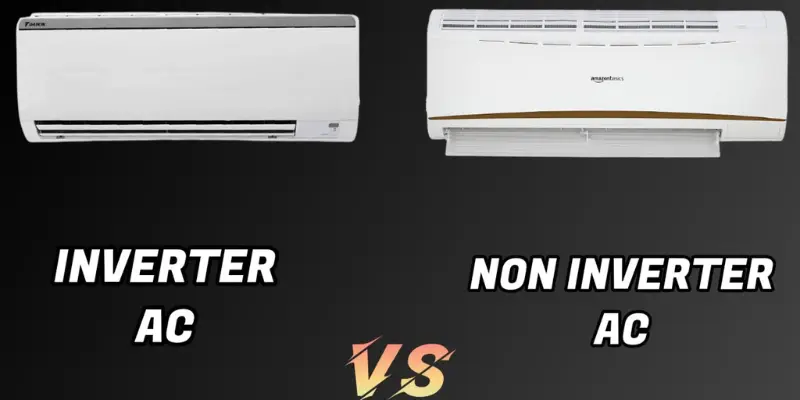
Choosing the right air conditioner is not just about price or brand—it’s about performance, energy efficiency, and long-term savings. Understanding the advantages and disadvantages of each type helps you make a confident choice that suits your needs.
Whether you plan to run your AC for long hours daily or just occasionally, knowing the pros and cons of Inverter AC vs Non-Inverter AC can save you money and ensure maximum comfort.
| Feature | Inverter AC | Non-Inverter AC |
| Advantages | - Energy-efficient: saves 30–50% electricity- Consistent cooling- Very quiet operation- Longer compressor life- Ideal for long daily use | - Lower upfront cost- Simple technology, easy to repair- Effective for short-term use- Durable in low-usage scenarios |
| Disadvantages | - Higher initial price- Requires careful maintenance- Sensitive to voltage fluctuations (may need stabilizer) | - Higher electricity bills- Temperature fluctuations- Noisy operation- Shorter compressor lifespan under heavy use |
How Inverter AC vs Non-Inverter AC Works
Understanding the working mechanism helps you see why inverter ACs save energy and provide comfort. Inverter ACs run continuously at variable speed, while non-inverter ACs start and stop repeatedly at full power.
This difference affects energy efficiency, room comfort, and electricity bills, making inverter ACs the more cost-effective choice for long-term use.
| Aspect | Inverter AC | Non-Inverter AC |
| Compressor Operation | Continuous, adjusts speed | Start/Stop at full power |
| Cooling Stability | Smooth and steady | Fluctuating |
| Energy Efficiency | High | Low |
| Comfort Level | Very comfortable | Average |
Electricity Consumption
Electricity bills are one of the primary considerations when comparing Inverter ACs to Non-Inverter ACs. Inverter ACs save energy because they avoid frequent compressor restarts, while non-inverter ACs consume more electricity during each ON/OFF cycle.
If you use your AC for several hours a day, this difference can add up significantly.
| Usage Scenario | Inverter AC | Non-Inverter AC |
| Daily Usage (8–10 hrs) | Very efficient | Expensive |
| Monthly Power Units | Low | High |
| 1.5 Ton AC | Uses less electricity | Uses more electricity |
| Long-Term Savings | Significant | Minimal |
Performance & Comfort
Comfort is not just about cooling—it’s about stable temperature and quiet operation. In Inverter AC vs Non-Inverter AC, inverter models keep the room at the right temperature without annoying fluctuations.
This makes them perfect for living rooms, bedrooms, and offices where comfort matters most.
| Parameter | Inverter AC | Non-Inverter AC |
| Cooling Stability | Excellent | Moderate |
| Noise Level | Very quiet | Noticeable |
| Room Comfort | High | Medium |
| Compressor Stress | Low | High |
Price & Maintenance
Before buying, it’s important to understand the cost and maintenance differences between Inverter AC vs Non-Inverter AC. Inverter ACs cost more upfront but save on electricity and are more durable, while non-inverter ACs are cheaper but may cost more in the long run due to higher energy usage.
| Aspect | Inverter AC | Non-Inverter AC |
| Initial Price | Higher | Lower |
| Electricity Bills | Lower | Higher |
| Maintenance | Moderate, careful handling | Easier, cheaper |
| Long-Term Value | Excellent | Average |
Window AC: Inverter vs Non-Inverter
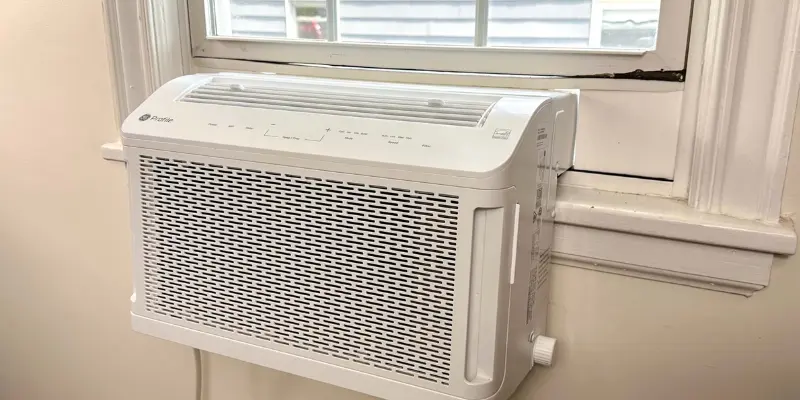
Window ACs are also available in inverter and non-inverter types. Inverter window ACs are energy-efficient, quiet, and durable, while non-inverter window ACs are cheaper and suitable for occasional use.
Knowing which type fits your usage helps you save money and get better comfort.
| Feature | Window Inverter AC | Window Non-Inverter AC |
| Energy Efficiency | High | Low |
| Noise | Lower | Higher |
| Price | Higher | Lower |
| Ideal Usage | Long hours | Short-term |
Which One Should You Buy?
The right choice depends on your usage, budget, and comfort needs. This table makes it simple.
| User Type | Recommended AC |
| Heavy daily use | Inverter AC |
| Budget-conscious | Non-Inverter AC |
| Long-term investment | Inverter AC |
| Occasional cooling | Non-Inverter AC |
Why Choose from Jalal Electronics?
Buying an AC is easier when you shop with Jalal Electronics. We offer authentic products, top brands, and expert guidance to make your purchase smooth and worry-free.
-
Top Brands & Genuine Products – All ACs come with a warranty.
-
Expert Guidance – Our team helps you pick the right model.
-
Energy-Saving Options – Both inverter and non-inverter models are available.
-
Fast Delivery & Installation – Hassle-free setup at your home.
- After-Sales Support – Maintenance and service whenever needed.
Conclusion
Choosing the right AC comes down to how often you use it and what you prioritize.
-
Frequent, long-term use → Inverter AC: Efficient, quiet, and cost-saving.
- Occasional or short-term use → Non-Inverter AC: Affordable and functional.
FAQs
What is an inverter AC?
An inverter AC adjusts the compressor speed to save energy and provide stable cooling.
Which AC consumes less electricity?
Inverter ACs use 30–50% less electricity than non-inverter ACs.
Is an inverter AC better for long usage?
Yes, inverter ACs are ideal for long daily usage due to energy efficiency and quiet operation.
Why is an inverter AC more expensive?
It uses advanced inverter technology and electronics, increasing upfront cost but saving money over time.
How do I know if my AC is an inverter or a non-inverter?
Check the product description for “Inverter Technology” or variable-speed compressor specifications.


